An Official Website Of Sri Grameswar Mahadev Temple Administration, Panchapalli
Festivals
There are two temples namely Sri Grameswar Mahadev and Nrusinghnath Mahaprabhu in this primitive place of Lord Shiva at Panchapali where they have been worshipped equally. As Lord Shiva and Lord Bishnu temples are situated in a single compound, this place is also called Harihara Kshetra. The festivals of Lord Shiva and Lord Bishnu are observed through out the year in this place of Grameswar.




Festivals
The information with regard to observance of main festivals of the temples are furnished below.
1. Pana Sankranti :
The year new of odia’s begins from this sankranti. This is also called the greatest polar Sankranti. New Calender comes in vogue from this day. There is also an arrangement for cooling Gods due to intense heat. Hence water is poured on the Head of Grameswar Mahadev. Further water is also poured on the holy basils tree making shadow on the Goddess of the said tree. There after pana bhoga is given to the Goddess of holy basils tree. The pot hanging there on is filled up with water throughout the entire month. On this day the Pana Bhoga is also given in the temple of Nrusinghnath. In this Sankranti pana cakes are worshipped in both the temples. Sri Hanuman Jayanti is being observed in the temple of Hanuman as situated in the compound.
In this sankranti, the door of the temple is opened after grand adoration and God takes bath and thereafter pana cake is offered to God on adoration. Sri Chandrasekhar, Sri Chandrasekhari and idols of Sri Radhakrishna are taken out of the temple and the same are taken in a wooden temple called Bimana and placed on the Pana mandap of Gobindpur amidst the devotees being followed by the singers of the glory of God, people beating bells and dedicated devotees with grand music and dance. Bhoga is offered to God there. A wooden pillar being worshipped is dug at a particular place of comedy. The devotees of the said pillar and their devotion after beating coconuts on the adorable pillar. In this festival so many peoples are gathered there and the traders get much profit due to heavy sale in this festival. Before departure of God from that place, fire is set to the lengthy straw heaps at night. The dedicated devotees walk in bare legs. On the said fire Herein after the festival called Jhamuyatra is ended. The God returns from Gobindpur and enters into the temple before right adoration.
2. Birth of Nrusingh :
The birth day ceremony of Lord Nrusinghnath is being observed on the fourteenth days of full moon in the month of Baisakha.
3. Chandan Yatra :
Chandan Yatra is being observed here for eight days from the second day of new moon in the month of Jyestha. Sri Chandrasekhar, Chandrasekhari in a wooden temple and sriradhakrishna in a palanquin are taken out of the Sriradhamohan Temple and they make their journey towards chandan pokhari (chandan pond). The said idols are placed in a boat in the said pond. They are rowed around in the said pond. After the game of rowing is over all the idols being well enrowned are taken to the Chandan Mandap and placed there facing towards east. Dance, music and singing of glory of God are made available there. During con of Dwaper Lord Srikrishn was making Chandan Yatra along wih dairymen and dairy women during the days of Summer. In commermoration of such Yatra the said Chandran Yatra is being observed now and God is smeared withsandal paste. The fishermen being engaged are performing their duties for God. The Gods make their return journey to the temples after completion full adoration in Chandan Mandap everyday. On the last day of said Chandan Yatra / Chandan Festival people are served with bhogas / prasad on the said Mandap.
4. Sabitri Amabasya :
Sabitri Brata is observed on the new moon day of the month of Jyestha. The hundreds of women observing such ritual worship in the temple of Sabitri wishing all welfare and long life of their husbands in the compound of the Sri Grameswar Temple.
5. Marriage of Lord Shiva :
The marriage ceremony of Lord Shiva & Parbati is the custom in the holy atmosphere in the temple of Sri Grameswar Mahadev. One devotee being recipient goes from the temple of Grameswar to the temple of “Maa Narayani at Gobindpur with grand pomp to invite the father of Bride. The father of the bride entertains the invitee and all guests accompanying him. The father of bride sends loaded things to the temple. At the time of marriage of Lord Shiva & Parvati, the father of the groom, father of bride and eagerous delegates remain present. A spiritual atmosphere is being created at the time of marriage due to ringing of bells, blowing of trumpets, singing of the glory of God, music and brusting of squaibs as well as the sound of hula huli.
6. Sitala Sasthi :
On the next day of the marriage of Lord shiva & Parbati i.e on the sixth day of full moon of Jestha Sitala Sathi festival is celebrted at night in the temple of Grameswar. The adorable things / bhoga of the said festival is offered to the God in the temple by the brahmins of Panchapali. After adoration Sri Chandrasekhar and Sri Chandrasekhari being seated in the planquin goes till the temple of Naryani after roming the entire village. There is also a great procession. Which is followed by drums beat, explosion of squibs, Bells, Trumpet Singers of glory of God, light decoration, dance of King and queen, bulls fighting, horse dance and the dance of male and female cranes that causes a great agitation in the village. The aspirant devotees join as the followers of groom in the said procession of God and Goddess. The brahmins offer bhoga to the God and Goddes in their yard while going on the way to Gobindpur. While reaching at temple of Narayani the father of the bride and inhabitants of Gobindpur entertain the followers of Groom with due respecgt. The palanquin is kept nearer to the lion door of the temple and adorable food stuff is given to Sri Chandra Sekhar and Sri Chandra Sekhari. There after God and Goddess on their return journey are carried in the palanquin to their own temple.
7. Debasnana Purnima :
The priest sweeps from the temple of Lord Nrusinghnath till the stage of God bathing on the very day of full moon in the month of Jestha. Sri Jews become present on the stae of God bathing. As per the custom the Gods take bath and are worshipped with adorable elements called bhoga. In the said Mandap hodge podge is offered in worshipping them. In the afternoon after chherapanhara they (Idols) are taken to the closed rooms. In this programme there is a great roll of brahmins, priests helpers, man carrying paratulte, god glory singers and musicians. In the closed rooms, green coconuts molassus and kanda are given on adoration. God resides in the saidroom called Anasaraghara for fifteen days. During this period devotees are restricted / paoventd from visualising the God. Duringthese days sprout green gram, coconut and molases coated fried rice are offered to the God on adoration.
8. CAR Festival (Sri Gundichayatra) :
Car festival is celebrated on the 2nd day of full moon in the month of Ashadha. This car festival starts during the period of Landlord of that area. The devotees visualise the God before the day of car festival after the painter printing the God. This is called vision of newly youthful God or Naba Jouban Darshana. The priests of God worships God int he afternoon on the day of car festival one well decorated car is kept waiting for God. The priest sweeps with great procession which is called “Chhera Panhara”. Thereafter the pahandi of God is done as per the customs. The paratute holder being engaged holds the paratute of God. Bada panda and other priests take Srijews to their respective chariots. The priest renders service of Chamara to the God. Sri balabhadra, Maa Subhadra and Sri Sudarsana appear in their respective chariots along with Sri Nrushinghnath and Sri Seshadeva. After their appearance in Chariots the fishermen tie up ropes to the chariots (Ratha). Black horses and white horses are attached to the chariot. The charioteer, Sakhi and mask of Hanuman are placed in cars. One fisherman servant climbing the chariots performs the duty of charioteer. The chariots being well decorated are drawn upto 10 feet a head. Thereafter the devotees offer coconuts to God on their adoration. Thereafter the fishermen being servants of God and other devotees draw chariot. The chariot of God stay at Balagandi for some time and bhoga is offered to God there. Thereafter the chariots of God are drawn to the temple of Narayani at Gobindpur by evening. Srijews stays in chariot at night of the said day. After evening adoration in the chariot bhoga is offered to Gods. On the next day morning at 9 A.M. priest sweeps which is called “Chhera Panchara” and Gods stationed in the house of Mousi Maa. As per the custom Gods are worshipped with due service there along with adorable items.
9. Bahuda Yatra
Srijews, after staying nine days in the house of Mousi Maa, come back to their own temple on the tenth day of full moon for which this called Bahuda Yatra. In the afternoon of this day Gods are seated in the chariots after sweeping from the house of Mousi Maa to Chariot. The chariot being drawn halts at Balagandi for some time and after offering adorable items to the God there. The chariot arrives at the temple of Sri Grameswar before evening. Here the conversation starts between Lord Jagannath and Mahalaxmi. Sri Mahalaxmi gets angry with Lord Jagannath for taking his elder brother, Balabhadra and Sister Subhadra with Him in car festivals but not her. Srimahalaxmi comes out the temple in a palanquim with music of bells and trumpet and God glory singers and moves around the Chariot and stays in front of the Chariot. One Bada panda of mahalaxmi and one puja panda on the chariot of Lord Jagannath represent from each side. There is also argument between them in shape of song. This is called quarrel between Laxmi and Narayan. The devotees gathered there get pleasure of hearing of such quarrel with sacred mind. The Goddess Laxmi comes back to the temple after breaking a piece of wood from the Chariot. The God remains in the chariot at night of tenth day of full moon. After arati in the evening adorable items are offered to God. Hymns as well as the glory of God are sung and cultural functions are also made in front of the temple. After offering (Chhera Panhara) Srijews enter into the temple before noon on the next day i.e., before adoration of hodge podge. All the idols come to the house of Sri Basudev (Bhagabad Gadi). After offering sweet items Sri Jagannath consoles Mahalaxmi for Her indifferent attitude. This affair is accomplished by Bada Panda and other panda Sebaka or service providers. Thereafter all Idols be seated on the throne.
10. Jalavisheka in the Month of Srabana
In every monday in the month of Srabana thousand of Koudia devottes come to the temple of Sri Grameswar for pouring water. The village yard echoes with devotional song of Koudias. The temple administration makes necessary arrangement for smooth and convenient performance of the devotees while pouring water in the temple.
11. Gahma Jhulana
The then Tahasildar of Ali state started this Swing festival in the year 1940 as it appears. Sri Radha Krishna take place in the swing from tenth day till full moon in the month of Srabana. The swing being nicely decorated attracts the devotees. Sri radha krishna were playing this game with milkmen, milk-women and boys of Gopa in the con of Dwaper. This swing festival is being observed in the monastery and temples as a commemoration of such Swing festival.
12. Janmastami
The eight day of 1st moon in the month of Bhadraba is being observed everywhere as the Birthday of Lord Sri Krishna. On this day the Janmastami (Birthday of Lord Krishna) is being observed near the stage of Sri basudev in the temple of Srinrusinghnath. New dress is offered to Lord Basudev. The description of birth of Lord Sri Krishna is read out from tenth part of Bhagabat. After completion of reading of Bhagabat at night adorable things are offered to Lord Sri Krishna (Lord Basudev). The devotees who observe this festival, offer adorable stuffs here.
13. Saptapuri Amabasya
The full dark night in the month of Bhadrab is called Saptapuri full dark night. This festival is also observed in the temple of Sri Grameswar mahadev. The cakes containing seven items are prepared to offer God as Bhoga. These cakes are offered during night adoration.
14. Suniyan :
This festival is observed in the temple. On this day God and Goddes wear new dresses. Some appointees and devotees renders gifts in the temple. The Goddes Sri Narayani wears new dress. The executive officers of the temple with devotees go from the temple of Sri Grameswar to the temple of Maa Narayani at Gobindpur in the midist musicians, trumpet blowers and helpers as per due custom after evening adoration and come back after visualising Goddess.
15. Devine Rituals in the month of Kartik :
In this month hodge podge bhoga is offered in both the temples at the time of Sunrise. The adoration of hodge podge is made at the time of Sunrise which is called Udaya Khechudi or rising hodge podge. This hodge-podge is given to the villagers and appointmentees.
16. Rasa Yatra
This festival is being observed in the month of Kartik. A new bamboo is dug near the Goddess of holy basis of Sri Grameswar and a sky lamp is burnt at the top of the Bamboo. The God comes back to the temple after completion of Rasalila.
17. Pushyabhisheka
The God is enthroned on the fullmoon day of pousha month. This ritual is in vogue during the period of landlords. Sri Laxminrushing is also enthroned.
18. Mahashivaratri: (Festive night of Lord Shiva)
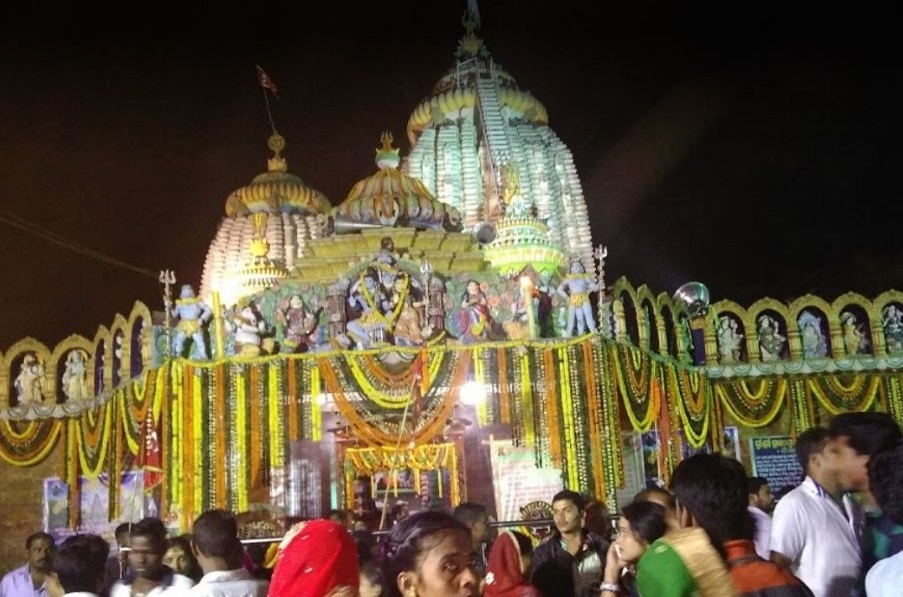
This fourteenth day of 1st moon in the month of Falguna is the day of appearance of Lord Shiva. On account of this the festive night of Lord Shiva is celebrated in the temple of Sri Grameswar Mahadev at Panchapali. The temple of Hari and the temple of Lord Shiva being situated closely inside the compound wall, there is a spiritual meeting between Hari and Hara in the festive night of Lord Shiva. On this holy day the devotees get fasting and pray to Lord Grameswar Mahadev with much devotion by burning ghee lamps throughout the night. After taking bath bala bhoga is offered to God with Mangala Arati. There after the devotees get opportunity of visualizing God. The thousands of devotees come to the temple of Sri Sri Grameswar Mahadev to visualize Him and offer adorable stuffs to Lord Mahadev. The hodge-podge is rendered to God in the day and there is also a grand adoration to God but no adoration is made at night. The great adoration is made available to God before 2 p.m. In the evening the dedicated devotees observing such festival meditate by offering burning ghee lamps till extinction of the greatest ghee lamps. Further performance of God starts at midnight. Sri Chandra-Sekhar and Sir chandra-Sekhari being seated in a well decorated chariot move thrice around the compound wall of the temple. After moving around the same the God enters into the temple. The adoration of Mahadeepa starts after bedha bhoga. After adoration the big priest / Bada Panda holding the greatest burning Lamp moves around the temple twice in a spiritual surroundings and climbs the summit of the temple to keep the great burning lamp at the top of the temple. After raising the great burning lamp the purohit / priest completes the final adoration as well as the work of sacrifice on the Portico of vision. This festive night of Grameswar Mahadev create a great attraction for the devotees throughout Odisha.
19. Dolayatra :
Dola festival is observed from the tenth day of full moon till the day of full moon in the month of Falgun in the temple of Sri Sri Grameswar Mahadev at Panchapali. Sriradha Krishna, Chandra-Sekhar, Chandra-Sekhari, Sriradha Gobinda and the idols of Radhakrushna take place in dola bimana / wooden Chariot of Dola. On the tenth day the God comes back to temple at night after touching altar.
The God in the Biman roams the village at night on the twelfth day of full moon and eats adorable stuffs in the yards of the villagers. The people who shoulder the Bimana of God keep the Bimana in front of the each house while moving in the village yard an the residents of the house offer bhoga or adorable items to God as a mark of their devotion towards God. In this night the God takes adorable things offered to Him on the constructed altars of the yeard of (1) supreme preceptor (2) God priest (3) Bebanta and Pattnaik.
Thereafter, the Gods in dola bimanas after roaming five villages of Panchapali and taking adorable stuffs from each house come to the people tree and await the Gadathakura Sri Brajakishore Dola. Sri Grameswar Dola after going forward welcomes Sri Brajakishore. Thereafter both the Gods come to the field of their gathering. Sri Grameswar Dola sits first and Sri Braja-Kishore Dola sits at left side of Sri Grameswar Dala. The God Tranutiani sits in a special seat in a small Bimana. Dola Melana is celebrated on the fourteenth day of full moon. In the noon adorable stuffs are given to God with singing the glory of God and thereafter the executive officer of the temple gives fees to God. The adorer of the temple throws colour powder called abhira on all the people gathered there and makes the surroundings red. The dynasty of the king of Gada Bishnupura makes dola melana. While Sri Grameswar Dola arrives at gathering place, Sri Brajakishore Dola invites Him with welcome. On the full moon day Grameswar Mahadev returns to the Dola temple and be seated on the swing balcony by wearing new dress and burns sheep shed on account of the memory of the killing of Mendhusura by Lord Krishna. The Gods comes to the temple after perusal of the new calendar and astrology.
Besides above festivals other festivals such as pushyavisheka, Dhanu Sankranti, Makar Sankranti, Maghasnana Yatra, Fire festival, Mahashibaratri, Dola Yatra, Jamuna Snana and Srirama Nabami are also observed in due time.